60-Second Summary
This guide compares the top Lead Forensics alternatives in 2026 across pricing, GDPR fit, integrations, data depth, and identification types to help you choose the right website visitor identification tool. The best option depends on your budget, region, integrations, and whether you need company- or person-level data.
Key takeaways: Leadfeeder is the strongest all-rounder; Warmly for real-time engagement; Happierleads for budget-conscious teams; 6sense for enterprise ABM; Factors for analytics; HubSpot Breeze if you’re HubSpot-native. No one tool fits every team—pick by budget, region, and data needs.
Standout strategies & tactics: Align tool choice to the workflow you need—real-time alerts and CRM routing for sales, attribution and journey tracking for marketing, person-level only if accuracy and regional coverage meet your goals. Use free tiers/trials to validate match rates and pricing before committing.
Real-world lessons & frameworks: Use the "By budget / By region / By use case" framework: prioritise granular intent signals, transparent pricing, easy integrations, and GDPR compliance. Speed matters—act while intent is fresh to improve conversion.
Actionable checklist: Shortlist 2–3 vendors, run live trials with representative traffic, verify match rates and regional/GDPR compliance, measure time-to-action and pipeline impact, then choose the tool that balances accuracy, cost, and workflow fit.
*This summary was created with AI assistance, using our original content.
If you’re comparing Lead Forensics alternatives right now, you probably already have a goal in mind. You want to identify the companies visiting your website, then turn that anonymous traffic into sales opportunities. The question is whether Lead Forensics is still the right fit for your budget, data requirements, and sales workflow.
In this guide, we’ll compare the top Lead Forensics competitors in 2026. We’ll look at pricing, use cases, GDPR fit, integrations, data and the types of identification available. Armed with this knowledge, you’ll be ready to select the best website visitor identification software for you.
Key takeaways
Best overall: Leadfeeder
Best for real-time engagement: Warmly
Best budget pick: Happierleads
Best enterprise ABM: 6sense
Best analytics and attribution: Factors
Best HubSpot-only option: HubSpot Breeze Intelligence
Lead Forensics alternatives at a glance
Bad news if you’re hoping to make a quick decision. There’s no single best Lead Forensics alternative for every team. The best choice depends on your budget, region, integrations, and the type of data you need. Some tools focus on company-level visitor identification. Others go deeper into person-level data, account-based marketing, prospecting, or attribution.
The table below compares companies like Lead Forensics by use case, pricing, data depth, and GDPR / EU fit.
All prices vendor-reported. Accurate as of July 2026.
Pricing and features can change quickly in this category. Always check the vendor’s current pricing page, contract terms, and compliance documentation before choosing a platform.
The 10 best Lead Forensics alternatives in 2026
Now, let’s look at 10 alternatives to Lead Forensics. Each has its own pros and cons. Discover which solutions align best with your business priorities.
1. Leadfeeder
Leadfeeder is the best overall Lead Forensics alternative for GDPR-native B2B teams that want visitor identification, intent signals, and compliant European data in a single workflow.
It helps sales and marketing teams identify companies visiting their website, understand what those accounts are researching, and act while buying intent is still fresh. That makes it a strong fit for teams that want more than a list of anonymous visitors.
Key features include:
Real-time website visitor identification, so teams can spot active accounts quickly
Buyer intent and account activity signals, helping reps prioritise the right follow-up
Native integrations including Salesforce, HubSpot, Pipedrive, and Slack
AI-powered enrichment to better qualify your leads
Trusted by 15,000+ customers to fuel their pipeline
Leadfeeder is stronger for European data than for U.S. data, so teams focusing on North America may prefer to evaluate other options.
Pricing: Flexible pricing from €79/month, as of July 2026.
Best for: GDPR-conscious B2B teams that want the strongest all-rounder for website visitor identification, intent and sales activation.
2. Warmly
Warmly is a Lead Forensics alternative best suited to teams that want real-time engagement layered on top of visitor identification.
Speed is Warmly’s core strength. It identifies website visitors, routes them into sales workflows, and helps teams engage while those visitors are still active on the site. Its product setup leans heavily into AI-led outreach, including inbound chat, AI SDR workflows, automated follow-ups, and more.
This makes Warmly a good fit for teams that want to start conversations quickly. (Of course, you may prefer to research and qualify leads as they come in.) Warmly also offers global coverage, which may appeal to teams selling beyond one core region.
The trade-off is accuracy and cost. Warmly reports around 15% person-level accuracy, so it needs close evaluation if individual visitor identification is your main buying reason. Its free tier can also jump sharply once you move into paid plans, so check pricing carefully before you commit.
Pricing: Starts at $10,000/year for AI web-deanonymization, vendor-reported as of July 2026.
Best for: Teams that want live engagement and AI-led outreach.
3. RB2B
If your team focuses more on the U.S. than Europe, RB2B could be a good alternative to Lead Forensics for you. RB2B delivers person-level website visitor identification for U.S.-based traffic.
RB2B excels at identifying the people and companies visiting your site, then pushing those signals into your sales workflows. Slack and Microsoft Teams alerts are a key feature, as well as HubSpot integration, pageview history, session recaps, and top page visit data. It also offers a free tier, delivering company-level data only.
However, outside America, RB2B isn’t quite as powerful. European-focused teams should check coverage and compliance carefully before making it their main visitor identification tool.
Pricing: Paid plans start at $79 per month, vendor-reported as of July 2026.
Best for: North America-focused teams that want person-level visitor identification.
4. 6sense
6sense is a Lead Forensics competitor built for enterprise account-based marketing teams that need predictive intent and account scoring.
It goes beyond basic website visitor identification by helping larger teams understand account activity across different channels. The platform is built for account-based marketing, with AI-driven intent data, predictive scoring, and go-to-market intelligence to help revenue teams prioritise their activity.
6sense is a strong fit for companies with mature sales and marketing operations. If your team already runs account-based campaigns at scale, it can help connect buying signals with sales action. On the other hand, some teams will find 6sense too complex and heavy, particularly if you just want to identify website visitors and follow up quickly.
Pricing: Custom enterprise pricing, vendor-reported as of July 2026.
Best for: Enterprise ABM teams.
5. Factors
Factors is a visitor identification tool for marketing teams that prioritise analytics, attribution, and journey tracking.
It helps teams see which accounts are visiting their site and connect that activity to broader go-to-market performance. Its strength is the marketing view: account identification, buyer-journey visibility, attribution, and multi-source matching across touchpoints.
That makes Factors useful when the main question is not just “who visited?” but “what drove the account here, what did it do next, and which channels deserve credit?” Sales-led teams may, however, miss the deeper contact, routing, and activation features available on other platforms.
Pricing: Lite starts at $199/month, vendor-reported as of July 2026.
Best for: Marketing analytics and attribution.
6. Happierleads
Happierleads is a simple website visitor identification platform designed for teams that want company ID and real-time alerts without a heavy setup.
The solution identifies companies visiting your site in real time, then gives sales teams enough context to decide whether the account is worth a follow-up. Happierleads also positions itself around GDPR and CCPA compliance, with its pricing page listing a 7-day free trial and no card required.
If there’s a limitation, it’s depth. Happierleads suits straightforward visitor tracking better than teams that need advanced segmentation, enrichment, and multi-step revenue workflows.
Pricing: Plans start at $99/month, vendor-reported as of July 2026.
Best for: Teams that want a simple entry-level visitor identification tool that makes the most of their budget.
7. ZoomInfo
ZoomInfo is a good option for enterprise teams that want website visitor intelligence alongside a large B2B contact database.
Its strength is scale. ZoomInfo combines company and contact data with WebSights, its website visitor intelligence product, so larger sales teams can connect account activity with broader prospecting data. That makes it a better fit for mature outbound teams than small teams that only need basic visitor identification.
The downside is commitment. ZoomInfo is known for premium pricing, long contracts, and upsell pressure, so compare it with other similar tools before buying.
Pricing: Custom/premium pricing, vendor-reported as of July 2026.
Best for: Enterprise contact data and U.S.-heavy teams
8. Albacross
Albacross is a visitor identification tool for European SMBs that want company-level insight and CRM integrations without a heavyweight enterprise setup.
It helps teams see which businesses are visiting their site, which pages they view, and whether those accounts show buying intent. Its European focus and GDPR positioning make it a sensible shortlist option for teams that care about regional fit as much as core functionality.
That said, Albacross may be too light for teams that need deeper contact data, richer intent signals, and more advanced sales activation workflows.
Pricing: Starter plan is €59/month, vendor-reported as of July 2026.
Best for: European SMBs that want approachable visitor identification.
9. Leadinfo
Leadinfo is a good fit for European teams that want a clean interface and GDPR-compliant visitor identification.
Simplicity is the key with Leadinfo. It helps teams identify which companies are visiting their website and then connect those signals to the tools they already use. With 70+ integrations and a straightforward setup, it suits teams that want practical visitor tracking without building a complex revenue operations workflow around it.
Leadinfo is lighter than some tools on deeper intent signals and multi-channel insight. For this reason, it may fit simpler company-identification use cases better than advanced sales- or account-based marketing plays.
Pricing: Starter starts at €69/month, vendor-reported as of July 2026.
Best for: Simple EU compliance.
10. HubSpot Breeze Intelligence
HubSpot Breeze Intelligence (previously Clearbit) is mainly an option for teams already committed to HubSpot.
HubSpot describes Breeze as its AI layer for marketing, sales, and service. The Breeze Intelligence tool focuses on enriching contact and company records with standardised go-to-market data.
If HubSpot already runs your CRM, marketing, and sales activity, this could be an excellent add-on. But of course, if you want a standalone Lead Forensics-style tool, it’s not the ideal choice. Pricing: From $45/mo per 100 credits, on top of a HubSpot subscription. Vendor-reported as of July 2026. Best for: HubSpot-only teams that want enrichment inside their current CRM.
What is Lead Forensics software?
Lead Forensics is a B2B website visitor identification tool that helps B2B teams identify which organisations have spent time on their website, even when they do not fill out a form.
It uses reverse IP and company identification data to link anonymous website visits to business accounts. This gives sales and marketing teams a clearer view of which companies are showing interest, what pages they viewed, and whether that activity could justify outreach.
In everyday terms, Lead Forensics helps teams answer questions such as:
Which companies are visiting our website?
What content or product pages are they viewing?
Which accounts might be worth a follow-up?
As of July 2026, Lead Forensics reports 60,000 active users. Its core data is company-level only, though some use cases may include contact data to enable more effective outreach.
For teams that rely on anonymous website traffic as a lead source, Lead Forensics helps turn passive visits into more visible sales opportunities.
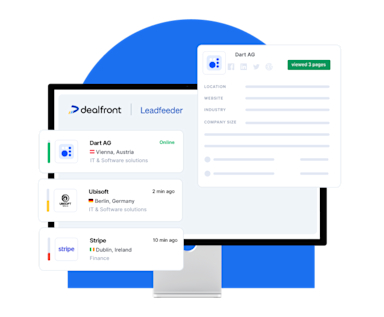
Your website visitors are already showing intent.
Leadfeeder identifies which companies they work for, what they looked at, and when to reach out -- then gives your team the contacts to follow up with. Trusted by 15,000+ B2B teams. Try it free.
Start Discovering NowWhy look for a Lead Forensics alternative?
Lead Forensics can be a useful tool for identifying anonymous business traffic. But buyers now expect more from this category, especially as more of the B2B journey happens before anyone speaks to sales.
In a 2024 survey, Gartner found that B2B buyers spend only around 17% of the buying journey with suppliers, while 61% prefer a rep-free experience.
That puts more pressure on website visitor identification tools to show useful intent, not surface another list for sales to sift through.
As of July 2026, Lead Forensics has a 4.4/5-star rating on G2. That’s a good score, but many Lead Forensics reviews point to areas where the tool could improve:
“The system can run quite slowly. Updates to tags and organisation can take a while to come into play.” – June 2026
“The UI is a bit dated and could do with a refresh.” – July 2026
“While the platform provides valuable insights, there are times when the contact information or company matches are either outdated or too broad to be immediately actionable.” – May 2026
Here are five reasons you might want to bring in a website visitor identification tool other than Lead Forensics:
1. Opaque Lead Forensics pricing
Lead Forensics does not list a fixed price on its pricing page. Instead, pricing depends on how much website traffic your business generates, with the trial used to show visitor volume and determine your package. That can make sense for tailored quotes, but it also makes quick comparison harder. Teams with tighter budgets may prefer alternatives with visible entry pricing before they book a demo.
2. Limited intent signals (who, not why)
Company identification answers an important question: who visited the website? But today’s teams also need the story behind that visit. They want to know which pages the account viewed, how often it returned, and whether its behaviour suggests real buying intent. Without that context, teams can end up chasing accounts that looked active but had low commercial value.
3. Regional coverage gaps
Effective visitor identification depends on data quality, but data quality can vary by region. A tool that works well in one market may feel weaker in another. European teams often need strong EU data, reliable company matching, and GDPR-compliant workflows, especially when sales teams operate across the UK, DACH, Benelux, France, and the Nordics.
4. Data quality and overlap
Many teams already have plenty of names in their CRM. The challenge is knowing which records matter now. A stronger alternative should help reduce duplicate work, improve account fit, and show which companies are worth actioning. Good data should sharpen prioritisation, not create more cleanup for sales and revenue operations.
5. Not built for modern B2B teams
Today’s B2B teams need more than static visitor reports. They want real-time alerts, CRM workflows, Slack notifications, enrichment, AI-powered insights, and other valuable capabilities. If a tool cannot fit into that workflow, teams may struggle to act on website activity before the opportunity loses its value.
What to look for in a Lead Forensics alternative
All the solutions we’ve talked about so far deliver visitor identification in some way. But the right tool for you will deliver more than that. You need something your team can trust, use quickly, and connect to the rest of your sales and marketing stack.
Here are five points to consider when choosing your new website visitor identification platform.
1. Granular visitor and intent data (beyond the company name)
Company names are useful, but they only take you so far. A stronger tool should show which pages an account visited, which topics it researched, and whether the activity appears to be active buying behaviour. Armed with this knowledge, your sales teams can prioritise the accounts showing genuine intent, rather than treating every anonymous visit as a lead.
2. Easy setup and integrations
Look for a tool that fits into the systems your team already uses. If your site runs on WordPress, for example, make sure it’s easy to set up behind the scenes. Simple integrations with HubSpot and Salesforce can all reduce manual work. The goal is simple: get visitor data into the right workflow quickly, so sales can act without copying records between disconnected tools.
3. Transparent, scalable pricing
Pricing should be easy to understand before you enter a long sales process. Ideally, you should be able to see the price of a plan on the vendor’s website, but some choose to keep this information private. Free trials, entry-level plans, monthly pricing, and clear enterprise quotes can all make comparison easier at the evaluation stage.
Cheaper tools can work well for small sales teams, but only if the data quality, coverage, and integrations still align with how your team sells.
4. Company-level vs person-level identification and match rate
Company-level tools identify the businesses visiting your site. Person-level tools attempt to identify individual visitors or contacts linked to that activity. That may sound more attractive, but accuracy, consent, and regional law make it challenging. Check how each vendor reports match rates, the data it uses, and whether the output is reliable enough for outreach.
5. GDPR and data privacy
For European teams, GDPR fit should sit near the top of the checklist. Ask how each vendor collects, processes, stores, and updates data. Check lawful basis, opt-out handling, data processing agreements, and compliance documentation before you buy. Strong visitor identification should help your team sell smarter without creating privacy risk.
How to choose the right tool for your team
The right Lead Forensics alternative for your team depends on your priorities. Are you looking for bang for your buck? Is there a specific region where your traffic originates? Or do you have specific goals?
By budget
If budget is the main issue, start with tools that publish clear entry pricing. Happierleads is a useful starting point for teams that want focused visitor identification without enterprise-level commitment.
In the mid-range, Leadfeeder and Albacross offer greater depth without moving into full enterprise complexity. Leadfeeder is the better balance if you want more than basic company ID, but do not need a large account-based marketing platform.
For enterprise teams, 6sense and ZoomInfo make more sense when budget, implementation time, and team size can support the investment.
By region
For Europe, shortlist Leadfeeder, Albacross, and Leadinfo. These tools are stronger fits when GDPR-conscious workflows and European data depth matter. RB2B suits teams focused mainly on the U.S., while ZoomInfo, 6sense, and Warmly may fit teams with North American or broader global go-to-market plans.
European teams should check coverage on a country-by-country basis, especially across the UK, DACH, Benelux, France, and the Nordics.
By use case
Choose based on the job you need the tool to do:
Sales prospecting: Leadfeeder or ZoomInfo
Account-based marketing: 6sense
Marketing analytics and attribution: Factors
Real-time engagement: Warmly
Simple visitor identification: Happierleads or Leadinfo
U.S. person-level identification: RB2B
HubSpot-native enrichment: HubSpot Breeze Intelligence
Leadfeeder is the strongest all-rounder for B2B visitor identification, intent signals, and activation in a single workflow.
Ready to discover who’s checking you out? Leadfeeder identifies which companies are visiting your website and automatically routes the best-fit ones to your sales team. Start a 14-day free trial. No credit card required.
FAQs about Lead Forensics alternatives
What are the best alternatives to Lead Forensics?
The best alternatives to Lead Forensics include Leadfeeder, Warmly, RB2B, 6sense, Factors, Happierleads, ZoomInfo, Albacross, Leadinfo, and HubSpot Breeze Intelligence. Leadfeeder is the best overall pick for GDPR-native B2B teams that want visitor identification, intent signals, compliant workflows, and integrations with other tools.
What is the difference between Lead Forensics and Leadfeeder?
Lead Forensics helps companies know which companies are visiting their website. Leadfeeder also identifies visiting companies, but adds real-time website intent, AI-powered enrichment, CRM and Slack integrations. Leadfeeder’s pricing is more flexible, and it excels in European data. That makes it a more all-round option for B2B teams wanting to turn website visits into sales opportunities.
Are there free Lead Forensics alternatives?
Yes. Leadfeeder offers a free-forever plan (Lite), which identifies up to 100 companies from your last 7 days of traffic with no card required, and Warmly offers a free tier too. Many other tools offer free trials or entry-level plans as well. A free plan is a low-risk way to prove the concept of website visitor identification before committing to a paid tool. That said, compare data quality, integrations, and compliance (GDPR included) before relying on a free tool to drive real pipeline.
Can these tools identify individual visitors, not just companies?
Some tools offer person-level identification or contact data, but accuracy, consent, and regional law make it a barrier in general. Many B2B visitor identification tools start at the company level and then use enrichment, contact data, CRM records, or sales workflows to help teams find the right decision-makers.
Is website visitor identification legal under GDPR?
Website visitor identification can be legal under GDPR, but it depends on how the data is collected, processed, and stored. European teams should check lawful basis, opt-out handling, data processing agreements, and vendor documentation. It can also help to get legal advice on how to handle this kind of outreach.
Is Lead Forensics worth it compared to the alternatives?
Lead Forensics may be the best option if it fits your budget, market, and workflow. If you value transparent pricing, stronger intent signals, integrations, or GDPR-compliant B2B workflows, you may find more success with alternatives such as Leadfeeder, Albacross, or Leadinfo.
Disclosure: This comparison was researched and published by Leadfeeder, a product of Dealfront Group GmbH. As a competitor in this space, we have a commercial interest in this topic and have aimed to present an objective, balanced analysis. All third party competitor pricing, features, and claims reflect publicly available information at the time of writing. Product details change frequently. We encourage you to confirm current information directly with each provider before making a purchasing decision. Trademarks and brand names referenced in this article belong to their respective owners and are used solely for identification.