The content marketing world is changing — yet many brands are still relying on outdated strategies, and then wondering why those efforts don't produce results.
Google is getting smarter and focusing on user intent rather than whether you included precise keywords.
It's getting easier to see where users have been and how they have interacted with your brand in the past, using tools like website visitor tracking software.
This is great news for brands that are looking for ways to better understand their customers.
Don't get me wrong; technical SEO strategies, like alt tags and meta titles, still matter. But to be successful, businesses need to focus on user intent rather than keyword stuffing.
In case you missed it, you can watch the webinar below.
Note: Want to gather buyer intent data and signals from your own website to better understand your visitors? Sign up and try Leadfeeder free for 14 days to uncover the companies that visit your website, plus details on how they interact with your site.
How is user intent impacting content marketing?
Let's say you type in "Indian Food" — Google doesn't know if you want an Indian restaurant, an Indian recipe, or maybe even a grocery store where you can buy Indian food, right?
Actually, Google is getting smarter. Here's what I see:
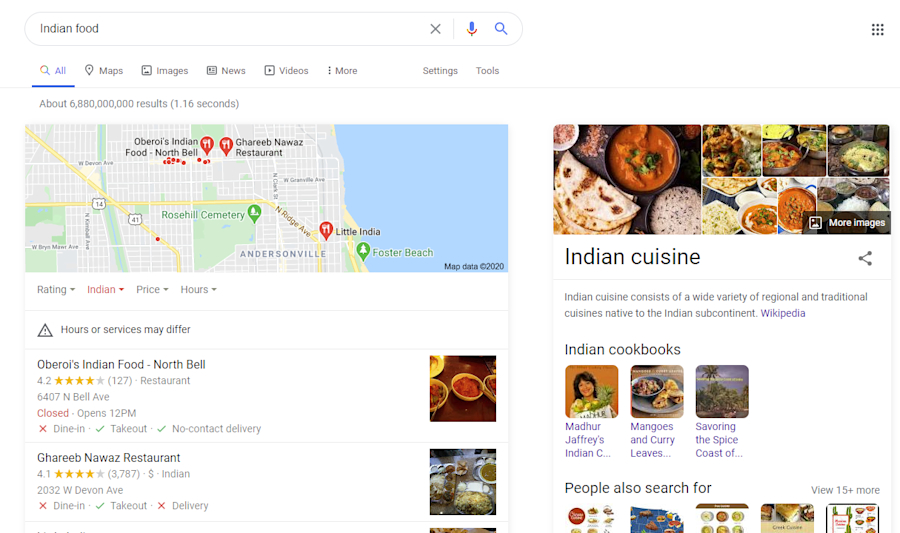
Google knows I am in Chicago right now, so they are guessing I am looking for an Indian restaurant. That second restaurant on the list is actually a place I ordered from last week.
Just in case that isn't what I mean, Google also includes information about what Indian food is and several cookbooks. They're not taking what I typed literally — Google's trying to figure out my intent.
5 ways to create a high-powered content marketing strategy for B2B
The shift away from literal search results is drastically changing the way we practice and track content marketing.
What does this mean for B2B content marketing efforts? Here's what you need to know to develop great content and a robust marketing strategy for B2B tailored to thrive in an intent-driven search world.
1. Use better formatting to improve readability
When it comes to online content, large blocks of content no longer work. Long, boring blog posts will have readers hitting that back button faster than you can say, "Sign up for our free trial."
Today's readers scan, browse, and look for headings to ensure that the page has the information they need.
If you want to draw readers in, make your posts easier to read by including formatting features like:
Bullet points (See what I did there?)
H2 and H3 headings
Bold and italic fonts to make key points stand out
Images, GIFS, and charts
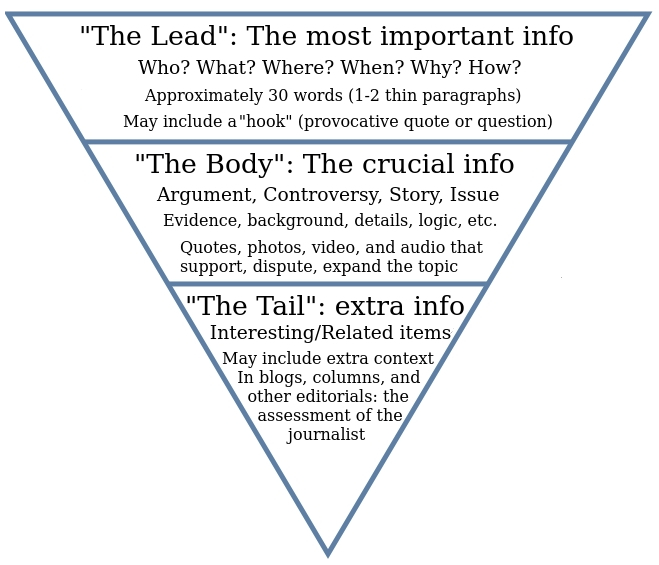
Consider using the Inverted Pyramid Style to guide your writing. This format draws the reader through written content by leading with the most essential information.
2. Upgrade and repurpose content
Great content doesn't create itself — it takes a ton of time. Which is one reason I think many B2B businesses don't get the most out of content marketing.
Take this post, which was a recap of another webinar we did:
It took me about three hours to write, but before I even wrote it, we had to have the webinar transcribed. Then I had to edit it, add all the images, links, and alt tags. Our designer created a few of the images, and that took around an hour.
All in, that post took about 5 hours, including writing, design, editing, and general project management.
For a post that might not even be relevant in a year. That can be really disheartening. Instead of letting all that awesome content die, look for ways to repurpose and update.
Start by opening Google Analytics and finding the most popular posts from 6 months or 1 year ago. Find the ones that aren't getting as much traffic now — maybe they need updated stats or more visuals.
Or create a longer version. I look at those posts and think — is it 2000 words? Why don't I make it the ultimate guide and expand it to 4,000 words?
Here are a few other ideas for making the most out of content:
Take content from a blog and create a slide deck
Combine several blog posts into an ebook.
Take an e-book and make a series of blog posts out of it
Turning content from a webinar or blog into an infographic
There is a ton you can do with the content you've already created. You don't need to crank out new content every day.
Instead, take a look at what you already have and find ways to make that content work harder.
3. Lower Your Bounce Rate
Bounce rate is the number of visitors who enter your site and leave after visiting one page. A high bounce rate often means folks aren't finding the information on your site useful — and it lowers your overall ranking.
If Google sees that 10 people are coming to your site and each spends 5 minutes there, they think, "Oh, okay, people like this site, it's useful!" and they'll start sending more and more visitors to your site.
Good content tends to have a snowball effect, and I find content marketing as a whole is like that.

So how do you start that snowball effect?
Use a tool like usertesting.com to hire someone to go through your site and provide feedback. You give the questions and tasks to complete, and they provide a recorded session with feedback, such as where the experience doesn't feel good.
It's an easy way to see where people are dropping off, so you can rearrange your site or maybe create more engaging content.
There's also Google Optimize, which we just began using at Leadfeeder for A/B testing.
It really does help give you an idea of where people are dropping off, so you know where to focus your efforts.
4. Pay attention to load time
Load time is a simple metric — but it can really ding your site in Google's eyes.
If you have a beautiful video that loads automatically when somebody clicks on your site, that, unfortunately, can really impact your load time and result in lower search rankings.
Google penalizes sites that take over 30 seconds to load, which I've seen repeatedly, especially with big design firms that have a really beautifully designed website.
Here's the thing — 37 percent of visitors will bounce if your site takes more than 5 seconds to load — and that includes on mobile devices, which struggle even more to load really complex images and videos.
Here are a few tips for improving load time:
Use Google's PageSpeed Insights tool to see where your site stands
Make sure images and videos are compressed
Consider using a lazy load function, which loads images only when a viewer scrolls to them
Use a CDN like Cloudflare, which stores data on multiple servers and sends the files from the location closest to site visitors
5. Build those backlinks
Backlinks, or inbound links, are links from other websites to your site. Google views each link as a sort of vote from the other website, saying, "This content is valuable."
Aylin shared how this strategy worked for Single Grain:
"Our CEO started guest posting, so all of a sudden there were backlinks from Inc., from Entrepreneur, from Forbes... they were linking back to relevant articles on our site, and we really were able to build our domain authority that way."
But wait, isn't guest posting dead?

Google doesn't like a ton of spammy links, so don't overuse this strategy. Instead, look for links from reputable sites, such as .gov or .edu domains, which tend to carry more weight.
Keep in mind that high-domain-authority sites are more valuable than lower-authority sites, so look for sites with a solid following and try to earn links from them.
Finally, don't write thin, spammy posts. Create actionable content that delivers significant value to readers.
Don't forget internal links — linking to pages within your own site will make it easier for users to navigate and help Google crawl.
Final thoughts
If all this sounds like a lot of work — you're right. Hey, no one said that content marketing was going to be easy — just that it would work!
Once you've started implementing these strategies, you need to decide which metrics to track. Stats in Google Analytics, like time on page and overall traffic, can give you an excellent idea of whether what you are doing actually works. Leadfeeder users can integrate their Leadfeeder data with Google Analytics to access a ton of actionable data that makes it easier to understand what works and provides your sales team with key information about leads.
Note: Want to gather buyer intent data and signals from your own website to better understand your visitors? Sign up and try Leadfeeder free for 14 days to uncover the companies that visit your website, plus details on how they interact with your site.

CMO
Jillian Als is Chief Marketing Officer at Leadfeeder and a B2B SaaS marketing executive with nearly two decades of experience leading global go-to-market teams. She specializes in revenue-driven marketing strategy, demand generation, and aligning marketing and sales organizations.
Throughout her career, Jillian has helped SaaS companies scale marketing-sourced revenue and build high-performing marketing teams across international markets. Her leadership experience shapes her perspective on marketing strategy, attribution, and the systems modern revenue teams use to drive sustainable growth.