60-Second Summary
Account-based experience (ABX) evolves ABM by aligning marketing, sales, and customer success to deliver consistent, personalized account journeys from discovery through expansion. It uses intent data and cross-team insights to prioritize ready-to-buy accounts, improve conversion, and boost retention and lifetime value.
Key takeaway: ABX removes silos by coordinating marketing, sales, and customer success to create account-centric experiences that increase conversion rates, retention, and customer lifetime value.
Standout strategies & tactics: Leverage intent data and firmographics to prioritize accounts, shift from MQLs to marketing-qualified accounts (MQAs), and combine proactive outreach with real-time responsive touches when signals change.
Real-world lessons & frameworks: Measure account-level KPIs (engagement, conversion, retention, NPS, time-to-conversion) and prioritize retention/expansion—these drive higher ROI than pure acquisition.
Implementation best practices: Align teams around shared account intelligence, integrate ABX tools with your tech stack to reveal anonymous behavior, and iterate continuously using real-time intent signals and performance metrics.
You’re likely also already using a form of account-based marketing (ABM) to zero in on those firms with the best fit. It’s an effective tactic, as well. Based on marketing data, your lead generation and messaging are tailored to the big-fish accounts you hope to attract.
But what happens when sales get involved? They can often find that the lead isn’t ready or willing to buy anytime soon. A disconnect is fomenting between departments or tactics.
An account-based experience (ABX) strategy bridges this gap.
ABX Explained
Account-based experience coordinates the efforts of your marketing, sales, and customer success teams. Unlike traditional demand generation that casts a wide net, ABX is a targeted strategy inspired by account-based marketing.
It creates personalized experiences for specific accounts and focuses on building long-lasting relationships, promoting loyalty, and raising conversion rates.
Here’s ABX at a glance:
Aspect | What ABX does | Why it matters |
Strategy | Aligns sales, marketing, and customer success | Eliminates silos and improves coordination |
Data | Uses intent data and advanced analytics | Helps surface rich intent signals and prioritize ready-to-buy accounts |
Experience | Personalizes every touchpoint across the journey | Creates consistent, relevant engagement for all stakeholders |
Focus | Targets high-value accounts end-to-end | Drives retention, expansion, and lifetime value |
Execution | Works across your existing tech stack | Ensures your ABX platform works seamlessly with the tools you already use |
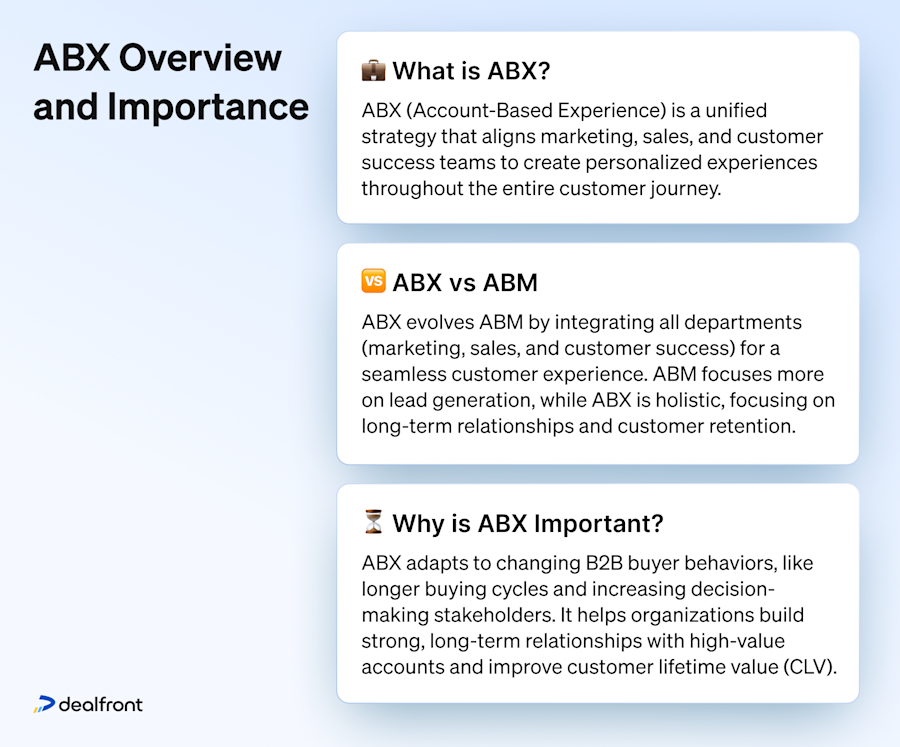
ABX takes the same approach as AMB, focusing on the unique pain points and challenges of an ideal account. The difference is that ABX applies this same strategy to the entire customer journey. Sales, support, and customer success interactions are all tailored to each account.
ABX is especially powerful in B2B because buying decisions involve multiple stakeholders, from procurement to executives, each with different priorities. Instead of fragmented outreach, ABX coordinates every touchpoint to deliver a consistent, personalized experience across the entire account. Combining buyer intent data with firmographic insights and cross-team feedback ensures messaging stays relevant and aligned at every stage. This marks a fundamental shift from isolated tactics to a unified, account-centric approach, setting the stage for how ABX differs from traditional ABM.
ABX vs ABM: Understanding the Differences
Account-based experience is an evolution of account-based marketing. It takes the theme of personalization and applies it to every interaction throughout the customer journey. This includes post-sale activities such as support and account expansion.
ABM prioritizes and targets high-value accounts such as market leaders or larger organizations. After selecting target accounts, marketing and (sometimes) sales activities are designed to resonate with each firm. ABX integrates all of the sales and customer success processes. This helps you deliver a consistent and improved customer experience (CX).
In a nutshell, the differences between ABM vs ABX:
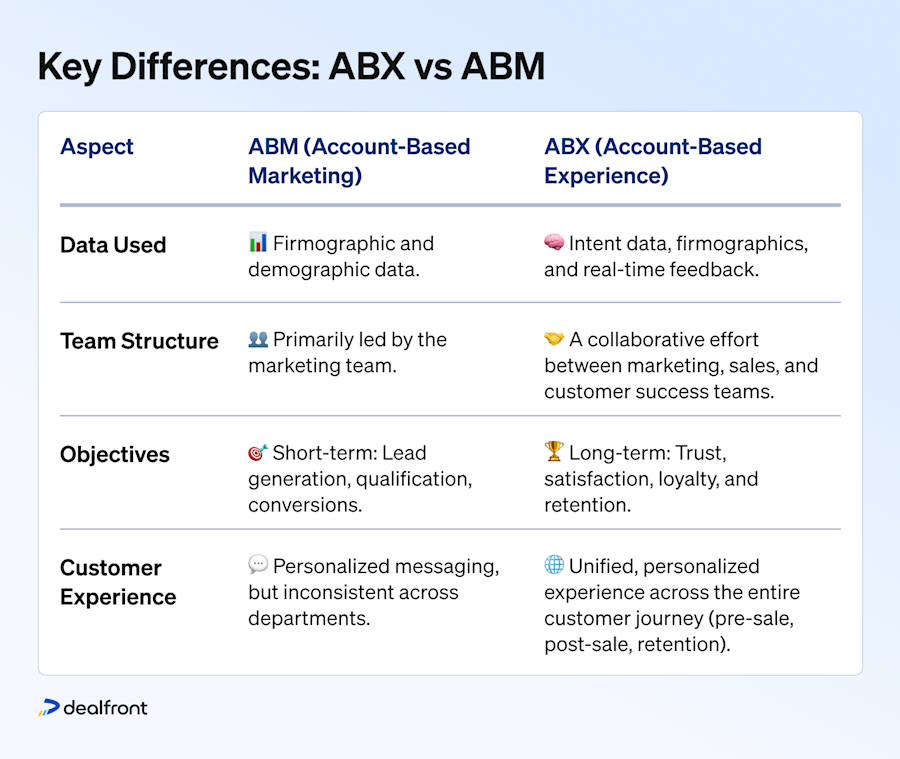
These differences between ABM and ABX highlight the value of transitioning from ABM to ABX. A comprehensive, collaborative effort delivers a better CX and yields long-term results.
Importance of ABX
We’ve answered the question of what ABX is, but why is it important for your business?
Market trends are constantly changing. There’s a shift toward more calculated purchasing behavior and higher customer expectations.
1. B2B buyers are more complex than ever
B2B buyers represent a much larger value than general consumers. When they look for a new solution, the process can be long and drawn out. A Dentsu paper showed that the average B2B buying cycle had increased from 350 days in 2023 to 379 days in 2024.
Why does it take so long for a business to go from initial research to making a purchase decision? There are many factors, including risk management, ongoing contracts, and budget constraints. A major contributor is the number of people involved in the buying decision process.
In the 2024 B2B Buyer Experience Report from 6sense, the average buying group size was 10.9 people. That’s around 11 gatekeepers your team needs to get past to reach deal conversion. Each bringing their own priorities and pain points to the negotiating table.
By focusing on the account's overall needs through an ABX strategy, you can navigate these demands using intent data and real-time feedback.
2. Competition is higher and differentiation is harder
The B2B market is as competitive as ever. No matter how niche your industry or vertical, the market is likely flooded with similar products and services. Compared to B2C, you’re fishing out of a small pond rather than an ocean.
A HubSpot sales survey reported an average sales win rate of as low as 28%, which has become a widely cited benchmark for B2B teams.. This is due to several factors, including rising uncertainty and market saturation. The same data also points to longer sales cycles and lower deal values.
Like an electric bass in a poorly mixed rock album, traditional sales and marketing approaches are no longer cutting through the mix. ABX helps you reach your ideal customer's figurative ear. This is not about price, but about delivering better experiences.
Instead of bombarding decision-makers with generic tactics, ABX sells relevant content and solutions.
3. Retention drives more revenue than acquisition
In B2B, customer acquisition costs vary widely. For example, data from FirstPageSage shows that the average CAC for the pharmaceutical industry is $187. In Fintech, however, this number skyrockets to $1,450 per acquisition.
There are few better ways to maximize revenue than by increasing the ROI of your marketing and sales spending.
You coordinate efforts across teams to create a seamless experience. This keeps customers engaged long after the initial purchase. The focus shifts from just landing deals to nurturing relationships. A focus on account experiences generates consistent revenue through renewals, upsells, and expansions.
Every retained customer continues to generate more income, increasing CLV. When your teams are aligned through ABX, they share insights about account needs and behaviors. Your team is proactive. Sales intelligence tools help them identify growth opportunities and address concerns before customers churn.
Reduced acquisition costs, increased retention rates, and higher CLV make ABX a powerful strategy. It leads to sustainable growth that leaves your competitors in your wake.
Key Concepts Underpinning an ABX Strategy
ABX means you have a roadmap to stronger customer relationships and bigger or longer deals. It takes a concerted effort spread across your entire organization. In the end, however, it’s worth the investment.
Before getting too deep into an ABX implementation, it’s worth understanding the key concepts that frame the approach:
1. Targeting the right accounts
Many characteristics make up your ICPs, including industry, company size, and budget. Technographics such as network infrastructure and tech stacks also make an impact. To find the right accounts, one key trait must not be overlooked: Buying intent.
ON24 reports that only 2% of B2B companies rate organizations' ability to identify accounts ready to buy as excellent. In contrast, 29% describe their prospecting capabilities as “poor.”
Why are so many companies struggling to find ideal customers with genuine interest and intent? Maybe they’re looking at the wrong data. They’re likely taking the ABM definition at heart, focusing only on dream prospects.
ABX leverages tools like Leadfeeder. Our platform helps you leverage intent data across 50+ firmographic and behavioral filters.
What does it all mean?
Your teams can collaborate and target not only ideal customers but also those ready to purchase.
2. Building awareness and nurturing accounts with personalization
Your team has established genuine buying intent. Now, it's time to nurture them with personalized content and interactions.
What does personalization look like in ABX?
It’s more than simply adding a decision-maker's name to an email template or mentioning common industry pain points in a pitch deck. A true ABX approach customizes every interaction for the account and the individual. What content is relevant and resonates with each stakeholder at each specific stage of the journey?
In Salesforce's State of Marketing Report, at least 85% of respondents cited customer retention and support content as their primary strategies for personalization.
Customer relationship management (CRM) data and other sources are good ways to build a fully unique CX. Use real-time monitoring and constant communication across departments to ensure strategies maintain momentum and drive conversions.
3. Cross-team collaboration
Approaches like ABM can create siloes between departments.
For example, marketing works with one set of buyer personas while sales has drafted up completely different templates. That means a marketing-qualified lead (MQL) may not necessarily score highly with your sales development representatives (SDRs).
With an ABX strategy, sales, marketing, and other teams unify on criteria and success metrics. That means shifting from a focus on MQLs to marketing-qualified accounts (MQAs). It's a more holistic view of the entire customer journey.
ABX collaboration is about creating a coordinated B2B sales strategy. Teams align around account-specific goals and insights. Better alignment helps them deliver more value at every touchpoint.
Using tools like Connect with Leadfeeder, teams can access and act on shared account intelligence in real time. This ensures everyone stays aligned with changing account needs and maximizes each opportunity.
4. Building long-term relationships
“According to HockeyStack Labs, the average sales cycle length in 2023 was around 69 days. This is even higher for complex solutions. In another report, they shared that, on average, it takes 266 touchpoints and 2,879 impressions to close a deal. This is why it's incredibly important to be prepared and offer the right information at the right time to the buyer when they need it.” - Patrick Schüller, Paid Social Manager, Leadfeeder
ABX is all about building long-lasting relationships with your ideal customers.
The B2B sales cycle doesn't end at conversion. Your relationship with an account is just beginning when they sign the contract.
By nurturing leads and existing clients, you’re setting your team up for easy wins through upselling and cross-selling. Not only that, but customer success and support continue to add value to interactions, increasing loyalty and reducing churn.
An ABX approach arms your organization to maintain and grow your existing account relationships.
Best Practices for Effectively Implementing ABX Marketing
We’ve answered several questions so far. The first was, what is ABX? The second, why take an ABX approach? In the last section, we addressed which components form an ABX strategy.
That leaves us with the how of ABX. How do you implement account-based experience at your business?
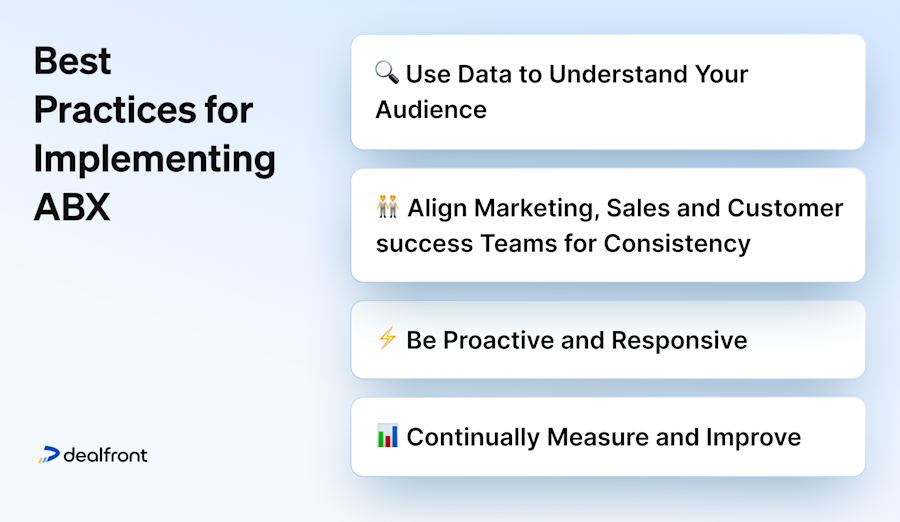
1. Use data to understand your audience
Effective ABX starts with comprehensive account intelligence. You want to go beyond basic firmographic data to understand how accounts interact with your brand across all channels.
What content are they engaging with? Which stakeholders are showing interest? What signals and interactions indicate they're ready to buy?
Leadfeeder by Leadfeeder helps you answer these questions by identifying and tracking account behavior. Take the guesswork out of lead qualification by using the right tools. With Leadfeeder, you’ll turn anonymous traffic into actionable insights — find unique customers, not just the usual!
Our software helps you see exactly who's visiting your website and what they're looking at. Reveal and export email addresses, phone numbers, and LinkedIn profiles to fuel your ABX, collaborate on outreach, and work together to close the deal.
2. Align your teams to deliver consistent messages
Gathering all the firmographic data in the world won’t accomplish anything if the right people don’t have access to it.
With traditional marketing strategies, information and insights can seem as isolated as uncontacted natives in the Amazon. This causes failure to meet expectations and promises.
Using the right communications, intent data, and other analytics tools ensures everyone is on the same page. Delivering consistent, relevant messages is at the core of any effective ABX strategy.
3. Be both proactive and responsive
ABX requires a delicate balance between planned outreach and timely responses. It combines the precision of ABM (outreach) with data leverage. This enables you to provide personalized, unified experiences (timely responses).
What if a key stakeholder suddenly starts researching a new feature on your website? That's a signal worth capitalizing on. In another scenario, support tickets indicate growing frustration. That's an opportunity to step in before the account starts shopping around for a replacement.
Using intent data and real-time analytics helps you strike a balance that empowers your team’s personal selling efforts.
Tools like Leadfeeder’s solutions can alert you to significant changes in account behavior. This enables you to respond quickly while maintaining your proactive strategy. The planned and responsive engagement pillars of ABX ensure you consistently deliver timely value.
4. Continually measure performance and improve
Every marketing and sales tactic can be improved by leveraging customer data. Monitoring and measuring performance applies to account-based experience in two main ways.
First, ABX means delivering personalized experiences throughout the customer journey.
How do you achieve this? By continually tracking the right key performance indicators (KPIs) for individual accounts. Relevant KPIs include customer satisfaction (CSAT), net promoter score (NPS), and customer effort score (CES).
Second, ABX requires constant fine-tuning to increase opportunities and close more deals.
Looking at the big picture, you’ll want to use performance metrics such as:
Account engagement rates
Conversion rates
Average customer acquisition cost
Multi-stakeholder participation
Time to conversion for target accounts
Account retention rates
Pipeline velocity for target accounts
A platform like Leadfeeder makes it easy for you to gather behavioral and firmographic data in real time. Our solutions help you identify who is engaging with your content and what’s resonating with whom.
Knowing who’s ready to buy, your teams can focus their ABX efforts on high-potential targets.
Leadfeeder Solutions Can Help You Nail an ABX Strategy
Evolving from an ABM or a more traditional marketing strategy is no small task. You need to break down silos to share data and insights. Sales, marketing, and customer success teams must work together to target and nurture your ideal clients.
Sounds a bit complicated, right? Implementing an ABX strategy for your business can be simpler than you might think. It starts by using the right tools and tactics. Leadfeeder solutions streamline critical aspects of account-based marketing. This includes gathering and leveraging intent data.
Leadfeeder helps drive your ABX strategy by turning page views into pipeline. Measure the impact of your paid ads, refine them for your ideal customers, and generate bigger deals and higher conversion rates.
Sign up for a free trial today and discover exceptional customers beyond industry norms!
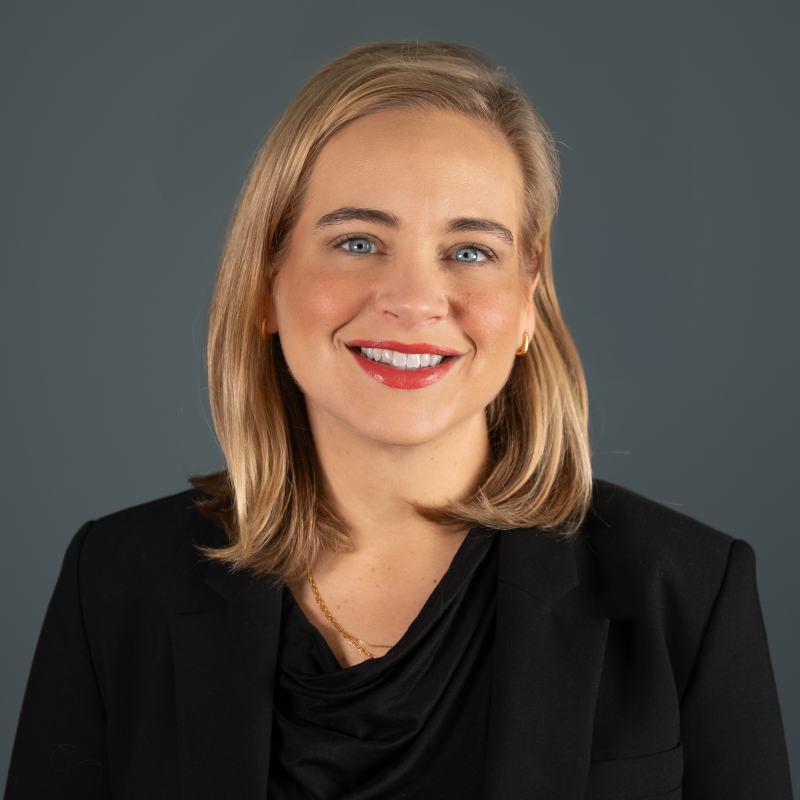
CMO
Jillian Als is Chief Marketing Officer at Leadfeeder and a B2B SaaS marketing executive with nearly two decades of experience leading global go-to-market teams. She specializes in revenue-driven marketing strategy, demand generation, and aligning marketing and sales organizations.
Throughout her career, Jillian has helped SaaS companies scale marketing-sourced revenue and build high-performing marketing teams across international markets. Her leadership experience shapes her perspective on marketing strategy, attribution, and the systems modern revenue teams use to drive sustainable growth.