Even when prospects hand over their information, most are nowhere near ready to buy. You end up with bloated lead lists full of low-intent contacts, while your sales team wastes time chasing people who only wanted a free resource. More leads do not automatically mean better prospects, especially when there is little buying intent behind them.
Modern sales prospecting needs to be more targeted, timely, and behavior-driven. Instead of relying heavily on gated content, sales teams should focus on identifying real buyer intent, prioritizing high-quality prospects, and engaging leads when they are actually ready to have a conversation. Here are three sales prospecting best practices we use at Leadfeeder.
Note: Leadfeeder is a sales prospecting tool that identifies which companies visit your website. Sign up for a two-week trial and see which ones are visiting your site. 👀
1. Create a prospect ranking system to filter out unqualified prospects
You know your ICP—but do you know which prospects are high-quality?
According to Sales Insights, half of all prospects are a bad fit, so this can save you a ton of time.
Low-ranking prospects are prospects that are unlikely to impact your bottom line. These are the little fish. They might convert, they might not, but it won't have a huge impact on your overall business.
You don't want to ignore them, but you're also not going to invest thousands of dollars in custom content or targeted ads.
Unqualified prospects are those you know won't do business with you. They might be located in an area you don't service, they don't have the budget, or they're in an industry that doesn't need your service.
Rather than guessing, assign point values to actions prospects take and use that data to filter out unqualified (or unready) prospects.
For example, a website visitor might be 1 point, a content download is 2 points, visiting your demo page is 3 points, and so on.
If you can, set combined actions (like a blog visit and demo view within the same day) to rank a little higher than each action alone.
Some tools do this for you.
For example, in Leadfeeder, you can see lead quality. If you hover over the question mark next to the lead value, it shows the number of visits, bounces, and page views for that specific lead.
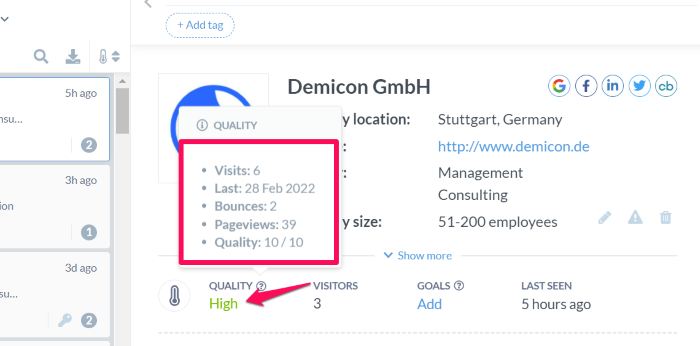
Lead quality visibility can help you filter out unqualified prospects, giving you more time to focus on high-quality leads.
Once you get rid of those unqualified prospects and table the low-ranking prospects, you'll have a list of buyers that are actually interested in what you have to offer. Sorting leads is a non-negotiable best practice in sales prospecting.
2. Focus on buyer intent, not the standard sales cycle
While there are multiple versions of the sales cycle, they all end up looking pretty similar. You find leads, qualify them, send an email, handle objections, and close the deal.
The problem? It's not quite that simple anymore. The customer now leads the buyer's journey — and they aren't ready to talk to sales when you are.
This means buyer intent is more important than ever, bringing us to our second best practice in sales prospecting.
Unfortunately, more than half (54%) of sales representatives report they don't have enough data about buyer intent.
So, where do you find that magical buyer intent?
Unfortunately, there's no buyer intent fairy who will deliver that data with a bow on top. You'll have to go looking for it.
The good news is, it's likely hanging out in tools you already have, including:
Your website: There's probably buyer intent data on it. Using a tool like Leadfeeder, you can track who visits your website, what pages they view, and even how often they visit.
Your email marketing service: Want to know who's actually engaging with your content and reading your content? Dig into your email platform to see what buyer intent data might be hiding out there.
Your CRM: Most good CRMs either have buyer intent data (like sales calls, live chat contacts, etc.) or can integrate with buyer intent tools to pull it all into one place.
Once you get that buyer intent data, make sure to filter it so you can spot leads that are ready to buy right away.
3. Ask for referrals the right way
Do you know where most buyers start the buying cycle?
Nope, not Google.
According to Harvard Business Review, 84% of B2B buyers kick off their buying process with a referral.
Even better, 91% of customers say they are happy to give out referrals but only 11% of salespeople ask for them.
So the first step to getting referrals is to ask for them. Easy enough, right?
You also need to make sure to ask at the right time — which is after a positive interaction.
Some sales ask for a referral right after they close a deal. That can work well if you have a referral program, like Leadfeeder does:
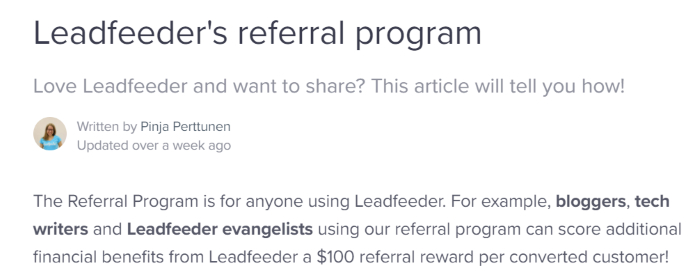
After someone has closed, they're likely excited about the product and willing to email their friends, especially if there is something in it for them.
Personally, I like to let them see what we can do first. I suggest setting a triggered action to indicate they're having success with your product, then following up to ask for a referral.
For us, that's usually after they’ve seen a solid number of qualified leads and are actively using the product — waiting for the client to see ROI is a good sales prospecting best practice.
Once they've taken that action, I reach out with a personalized email or call to check in and ask if they're willing to share their success with someone else.
In most cases, they’re happy with their success and willing to refer us to friends or colleagues in their industry.
Sales prospecting best practices must recognize that the buyer is in charge
Prospecting is hard, but it's also the foundation of the sales process. Get the prospecting step wrong and even the best salespeople won't reach their quota.
To succeed at prospecting, focus on understanding your ICP and buyer personas, monitoring your accounts for intent signals, and asking for referrals.
Above all, remember the buyer is in charge — so you may need to adjust your approach to meet them where they are in the process.
Note: Leadfeeder identifies site visitors and tracks buyer intent. Sign up for a free two-week trial.

Team Lead Growth AM/Sales Team @ Leadfeeder
Thijs Schutyser is Sales Manager at Leadfeeder with more than a decade of experience in B2B sales and pipeline generation. He has worked across account executive and leadership roles, helping companies turn website visitor data into qualified sales opportunities.
Having delivered hundreds of product demos and worked directly with sales teams across Europe, Thijs brings firsthand experience in modern sales prospecting and buyer engagement. His experience using visitor insights and intent signals to prioritize outreach informs his perspective on building a predictable pipeline and improving sales prospecting strategies.